
As face painters, we are always looking for ways to perfect our linework, try out new colour combinations and test new ideas. You may have seen painters using Kraft brown paper rolls or the blank underside of cardboard delivery boxes instead of reusable practice surfaces.
If you use paper or card to paint a design and keep it in a binder as a reference menu for your gigs, that can be a lovely way to log your work.
But what happens when you make a mistake, mess up a line or just want to doodle? Before putting those painted practice scraps in the recycling bin, it is worth checking what your local service accepts.
Can painted Kraft paper and cardboard be recycled?
Clean, uncoated paper and cardboard are commonly accepted for recycling, but paint, coatings and other materials can affect whether painted scraps are suitable for your local collection.
Not all paints are the same. Acrylic paint can leave a plastic film, while face paint formulations vary. The amount of paint and the rules used by your local recycling service matter, so it is not accurate to say that every brushstroke automatically makes a whole piece of cardboard unrecyclable.
Check your council or waste collector's guidance for painted paper and cardboard. If the guidance is unclear, ask before putting it in your recycling bin rather than hoping for the best. Follow their advice on disposal, along with any relevant instructions from the paint manufacturer.
The waste from everyday practice
When you are perfecting a difficult design, warm-up doodles and mistakes can quickly use up a stack of paper or card. Reusing a delivery box gives it another purpose, but it still leaves you with a painted piece to keep or dispose of afterwards.
A reusable practice surface offers a different approach: instead of reaching for another sheet whenever a brush slips, you can clean the surface and start again.
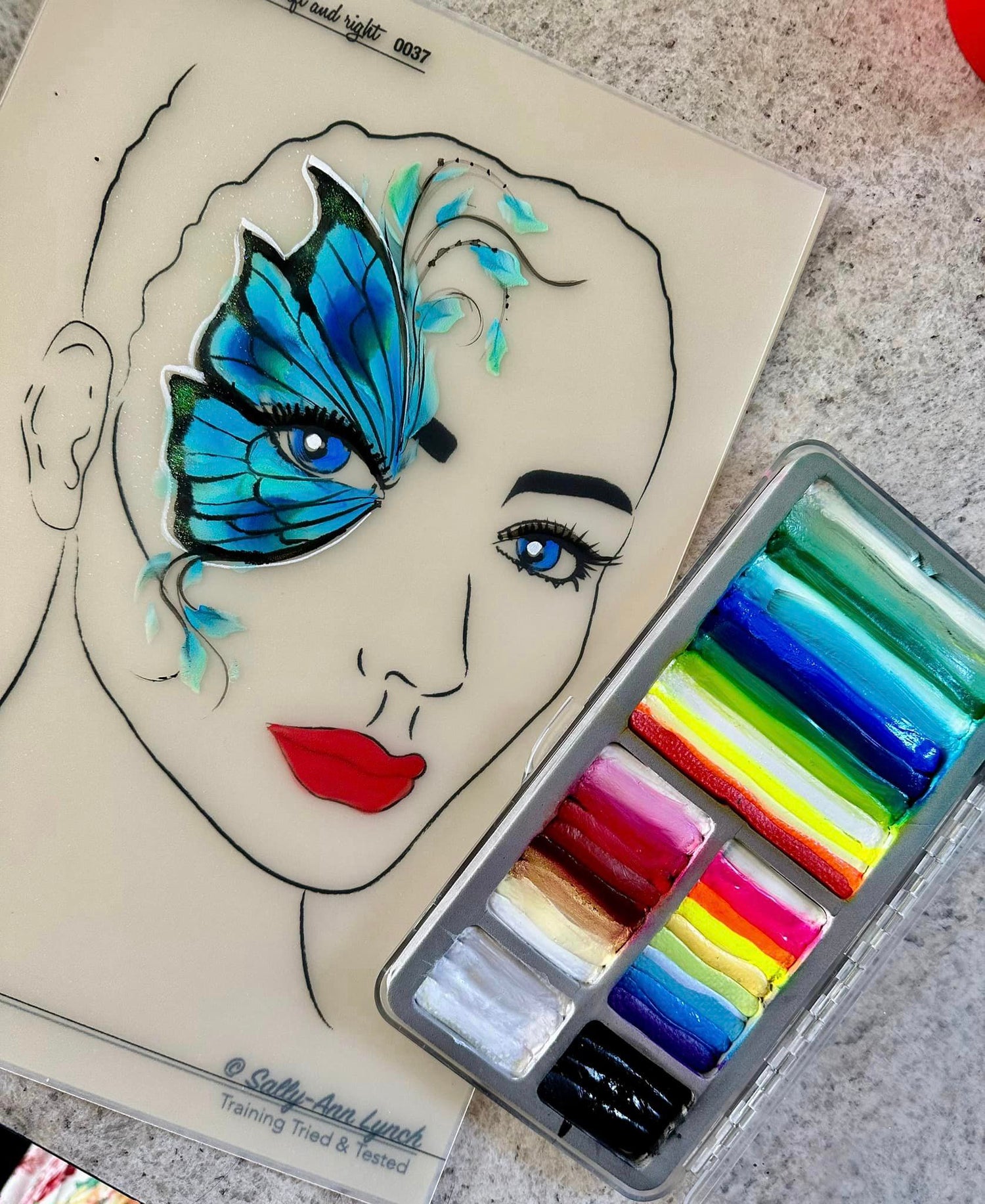
Reusable practice boards by Sally-Ann Lynch Training Tried & Tested
Paper and card can be useful for designs you want to keep. For regular linework drills, colour experiments and daily practice, my reusable practice boards give you a surface you can return to again and again.
- Paint, clean and repeat. A mistake does not have to mean throwing away another practice sheet. Clean your board according to its care instructions, then have another go.
- Use fewer disposable practice sheets. A reusable board can reduce the amount of paper and cardboard you use for repeated drills.
- Practise on a different surface. Absorbent paper and cardboard can behave differently from a practice board. Try your linework on your chosen board and keep practising on real skin too, as no practice surface is an exact substitute.
- Photograph your favourite designs. Take a clear photograph of the finished design before cleaning your board. Keep a digital reference folder, or print selected designs for your gig menu.
Photograph, print and keep the brown-paper look
If you paint a design you love on your practice board, you don't have to lose it when you clean the board. Take a photograph of your finished design and keep it in a digital reference folder, or print it for your portfolio or gig menu.
Use soft, even lighting and try to avoid glare or shadows across the design. You can also use your phone's camera or photo-editing features to adjust the brightness, exposure and warmth so the details are clear. Keep the colours as true to your original design as possible, rather than using a heavy filter.
Love the look of designs on brown paper? Try printing your photograph onto uncoated brown Kraft paper that is suitable for your printer and accepted by your local recycling service. This can give your reference pages a similar brown-paper feel without painting directly onto a fresh sheet for every practice attempt.
Bear in mind that brown paper will change how the printed colours look, and most home printers do not print white ink. White areas may show as the brown paper instead, so try a test print first. For a closer match to your painted colours, print on white paper and add a brown-paper-style background to the image if you wish.
When printed reference pages are no longer needed, check your local recycling guidance. Ordinary uncoated printed paper is commonly accepted, but laminated sheets, photo paper and coated prints may have different disposal requirements. Keeping a digital copy also means you only need to print the designs you really want in your folder.
What should you do with painted practice scraps?
Keep designs you want to use as references. For unwanted painted scraps, follow your local council or waste collector's instructions. Where painted paper or card is not accepted for recycling, use the disposal route they recommend. Avoid putting leftover liquid paint into a recycling bin, and follow the manufacturer's disposal guidance.
Reusable boards are not a completely impact-free or “zero waste” solution, but using the same board repeatedly can help you cut down on disposable practice sheets.
Let's keep practising, experimenting and making beautiful designs, while being thoughtful about the materials we use and what happens to them afterwards.