
Getting Started: Build Your Skills First
How you work is entirely up to you. You have chosen to be your own boss and in charge of your own destiny — and professional face painting is not for the faint-hearted.
It can be a truly amazing career, but it is also hard work and, at times, stressful. There is a lot to consider, so let's go through it.
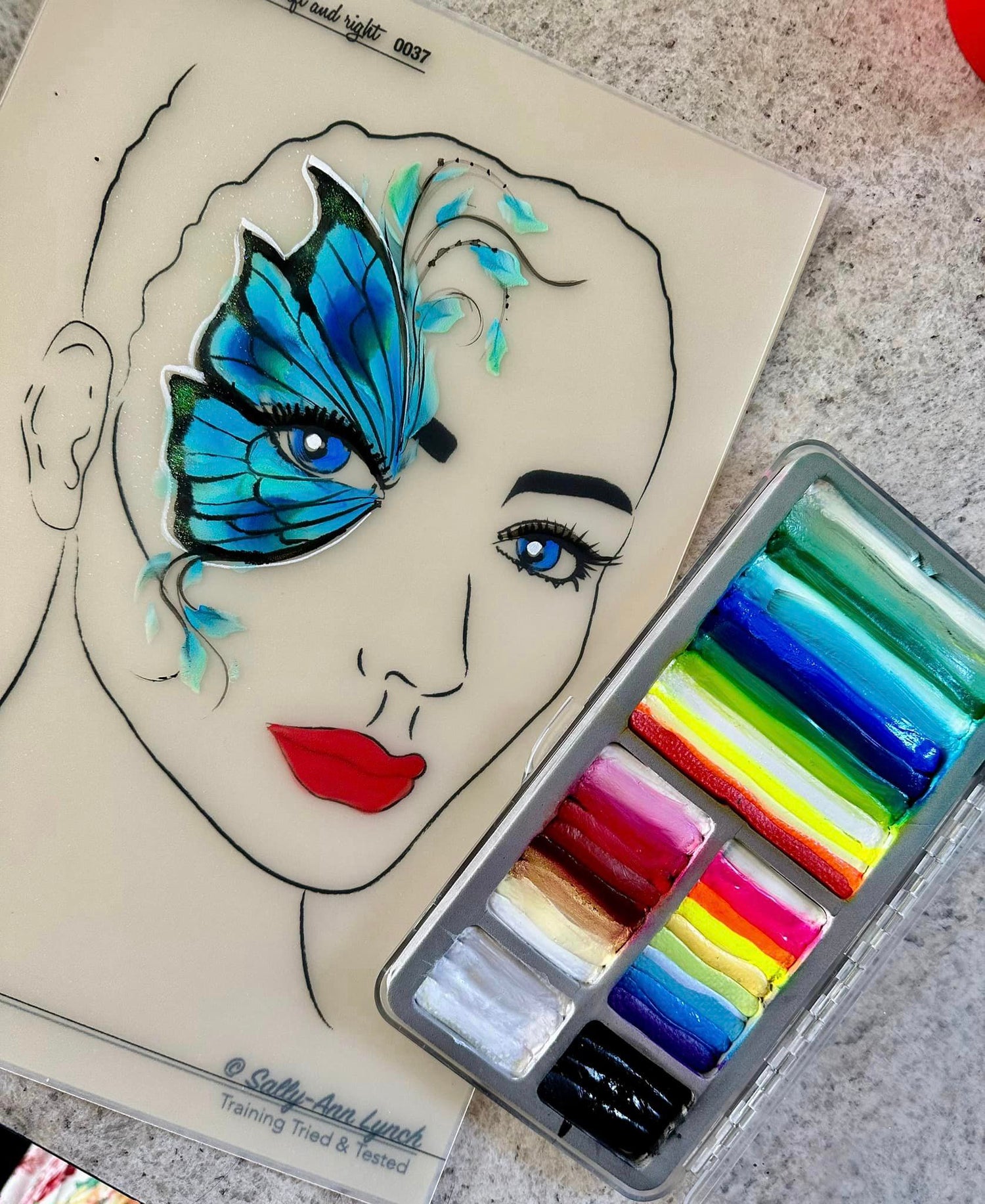
Your first priority is to become thoroughly experienced in your craft. Whether you work with sponges and brushes or rely on your onestroke brushes, get as much training as possible — in person, through online learning, or by dedicating time to the wealth of free tutorials available.
One-stroke skills are transferable too. You can learn from artists working in other mediums, as the brush movement is fundamentally the same. Just remember: unlike on paper, you cannot rotate your canvas. Your practice board — and your client — must remain stationary.
Choosing the Right Events for You
Whether you are a hobbyist or building a full-time career, being prepared is vital. Start by working out which types of events suit you best.
Fee-paid work offers the most security. It allows you to predict your monthly earnings and positions you clearly as a professional entertainer.
Pay-per-face events can be a useful way to gain experience, and at well-attended events, earnings can be strong. However, they come with real risks:
- Weather and low attendance can significantly affect your income.
- High-footfall events are often expensive to enter, and organisers may expect face painting to be included for free.
- This model can inadvertently devalue your services in the eyes of your audience.
If you do offer pay-per-face services, ensure you can take card payments — many people no longer carry cash. Also be mindful that remote locations may have limited Wi-Fi, which can affect card readers.
Pitch Fees and Stallholder Events
Some events require you to pay a pitch or stallholder fee. Before committing, do your research:
- Check the organiser's refund policy if the event is cancelled.
- Find out whether similar professionals will be attending — competition can reduce your takings and, in some cases, create a difficult atmosphere.
- Consider the conflict-of-interest risk: if another artist at the event causes an allergic reaction, a client may not remember who was responsible — and your reputation could suffer.
Negotiating Your Terms
When agreeing to pay-per-face work, make it clear to the organiser that any fee-paid booking received within a certain timeframe will take priority. This alone can sometimes prompt an organiser to reconsider and offer a paid arrangement instead.
If you are approached last minute by an organiser who has been let down, remember: they now face the prospect of no face painting at their event — or paying regardless. Use that position wisely.
If an organiser wants you for four to five hours but won't pay a fee, consider negotiating a hybrid arrangement: two hours fee-paid, with pay-per-face thereafter if the queue remains strong. The organiser can manage the money collection for the first two hours, keeping you free to focus on painting without interruptions.
This also keeps things hygienic — passing money back and forth while working in close contact with clients is not ideal. Always keep hand sanitiser within reach, even when you are not handling cash.