
Every face painter starts somewhere — and making mistakes is part of the learning process. But knowing what to avoid from the start can save you a lot of frustration and help you progress much faster. Here are the most common mistakes beginners make and how to avoid them.
Using the Wrong Paints Not all face paints are created equal. Always use professional, skin-safe, water-activated face paints. Cheap craft paints or acrylic paints are not safe for skin and can cause reactions. Invest in quality from the start — your clients' safety depends on it. Sally-Ann Lynch's bespoke palettes are specially curated for professional use.
Too Much Water on the Brush One of the most common beginner mistakes is overloading the brush with water. Too much water makes paint runny, muddy and difficult to control. Dab your brush on a small towel after loading to remove excess water before applying to the face.
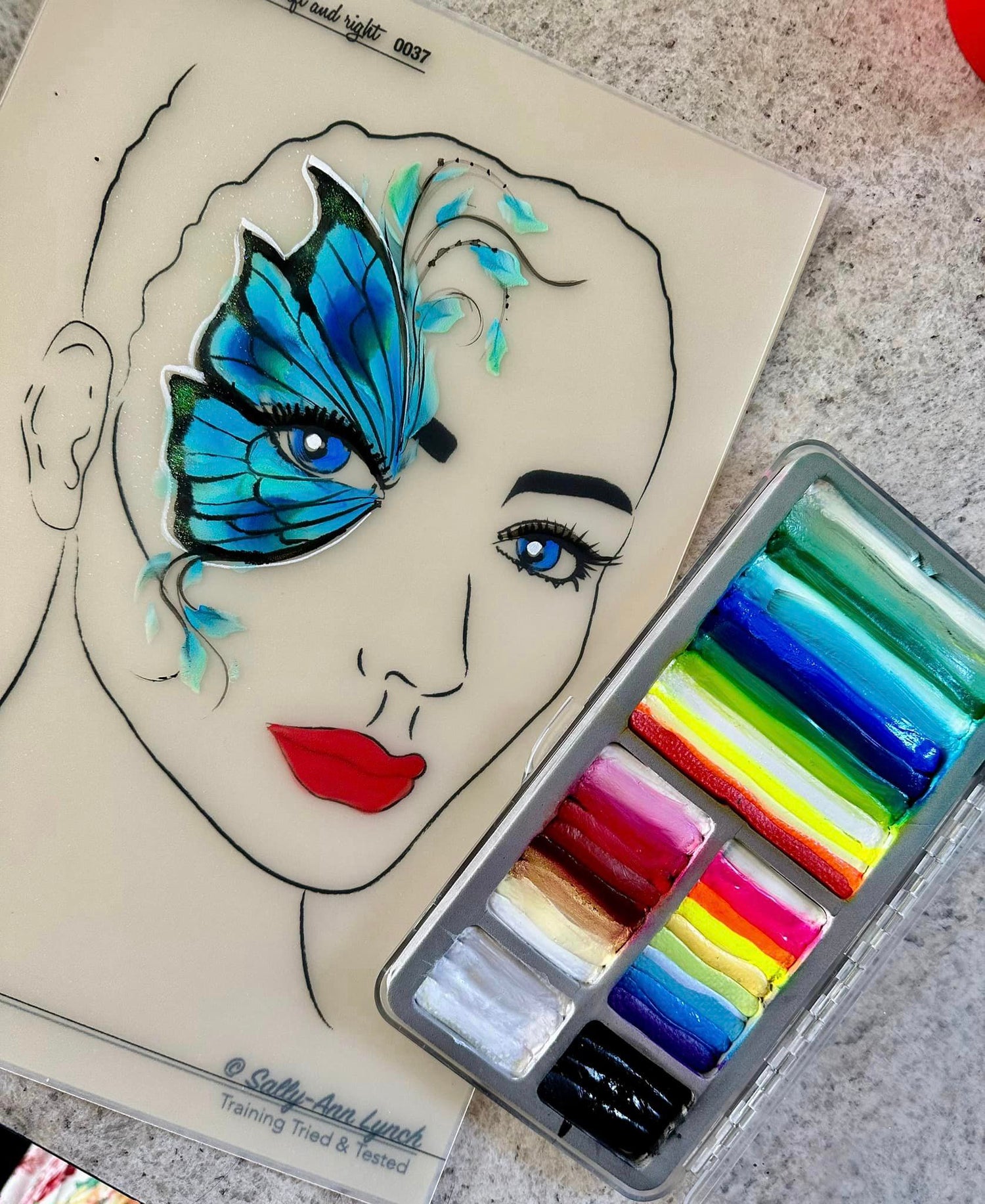
Not Practising Enough Confidence comes from repetition. Many beginners jump straight into working on clients without enough practice. Use a practice board to build your skills before every event. The more you practise, the more fluid and consistent your work will become. Find out how to get the most from your practice board in our dedicated guide: How to Use a Practice Board to Improve Your Face Painting Skills.
Try A Warm Up Even some experienced face painters warm up before events. Spend a few minutes on your practice board or arm before you start on clients — it gets your hand moving and your palette performing at its best.
Poor Brush Care Beginners often neglect their brushes, leaving paint to dry in the bristles or storing them incorrectly. Clean your brushes thoroughly after every event, reshape them and store them properly in a kit bag or brush roll after the job.
No Design Menu Many experienced face painters work without a menu board. I am one of these people and I created the practice and display boards back in 2015. Asking a child "what would you like?" without showing them options may lead to long decision times and queue build-up. On busy events, display your designs on a practice display board so clients can choose quickly and confidently.
Undercharging for Your Work Many beginners undervalue their services. Face painting is a skilled profession that requires investment in training, quality supplies and ongoing practice. Charge what your work is worth from the start.
Set yourself up for success — browse Sally-Ann Lynch's bespoke face paint palettes, practice boards, professional brushes and starter kits.